To book: Pompeii and Vesuvius trip with pizza, from $59 per person. Check dates Tour details
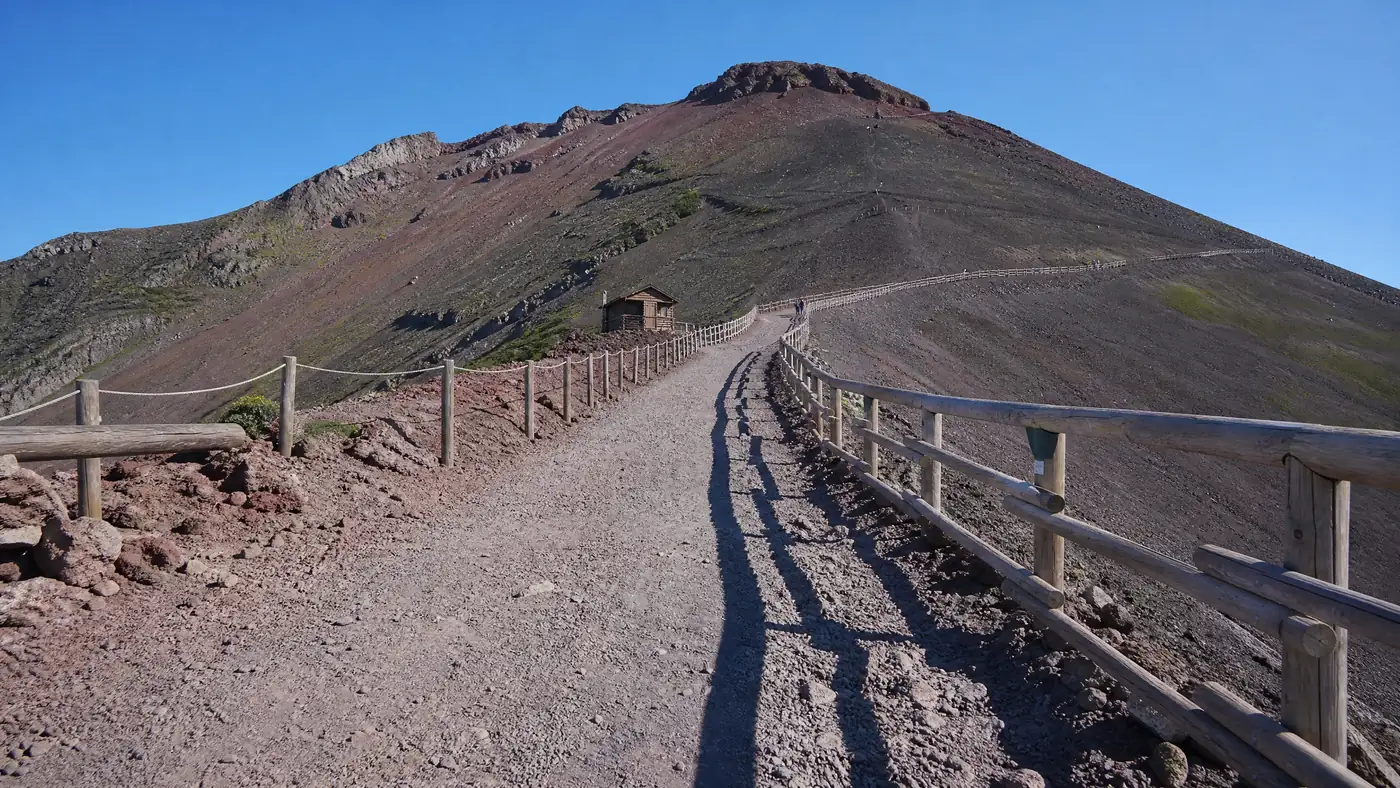
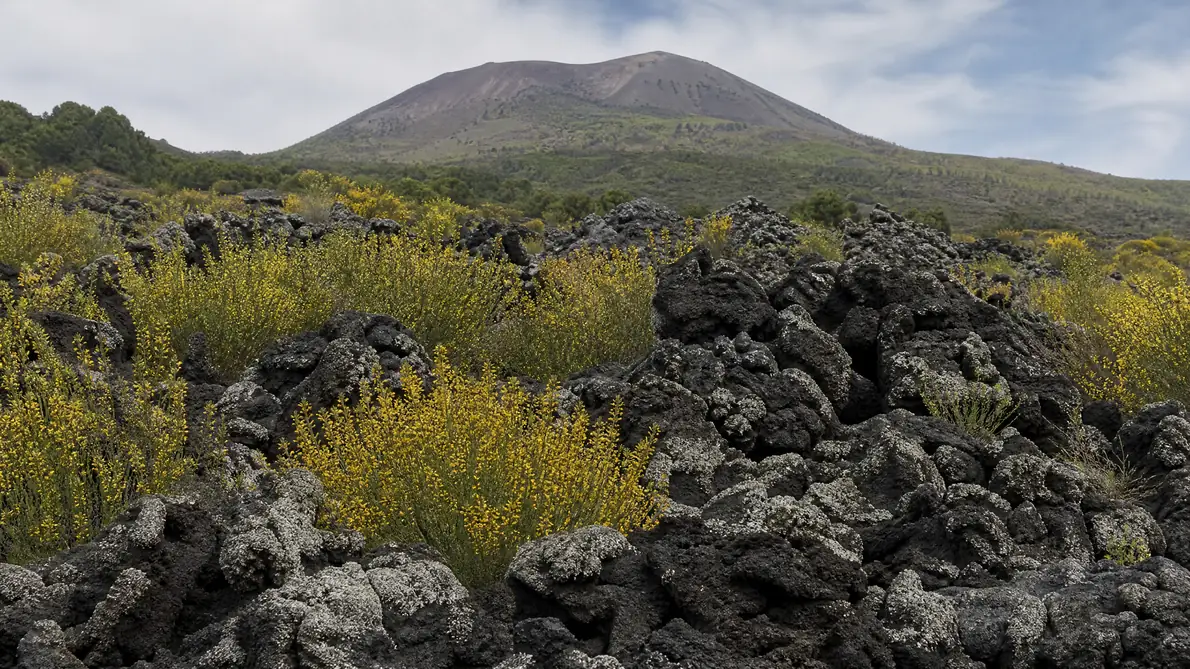
The crater path crosses the lava from the last eruption, that of 1944. Further down, under the AD 79 ash, lie Pompeii and Herculaneum. Vesuvius is an open-air history book, and knowing it changes the climb.
We used Wikipedia pages on the volcano and the AD 79 eruption, and the Civil Protection and Vesuvius Observatory pages for today's situation. The tone remains sober: no forecasts, no alarms.
The short answer
The last eruption of Vesuvius was in March 1944. The most famous is the AD 79 one, which destroyed Pompeii and Herculaneum; the 1631 one killed about 3,000 people. Today the volcano is dormant, with a green alert, and is monitored 24/7 by the Vesuvius Observatory.
When was Vesuvius's last eruption?
In March 1944: since then the volcano has been dormant.
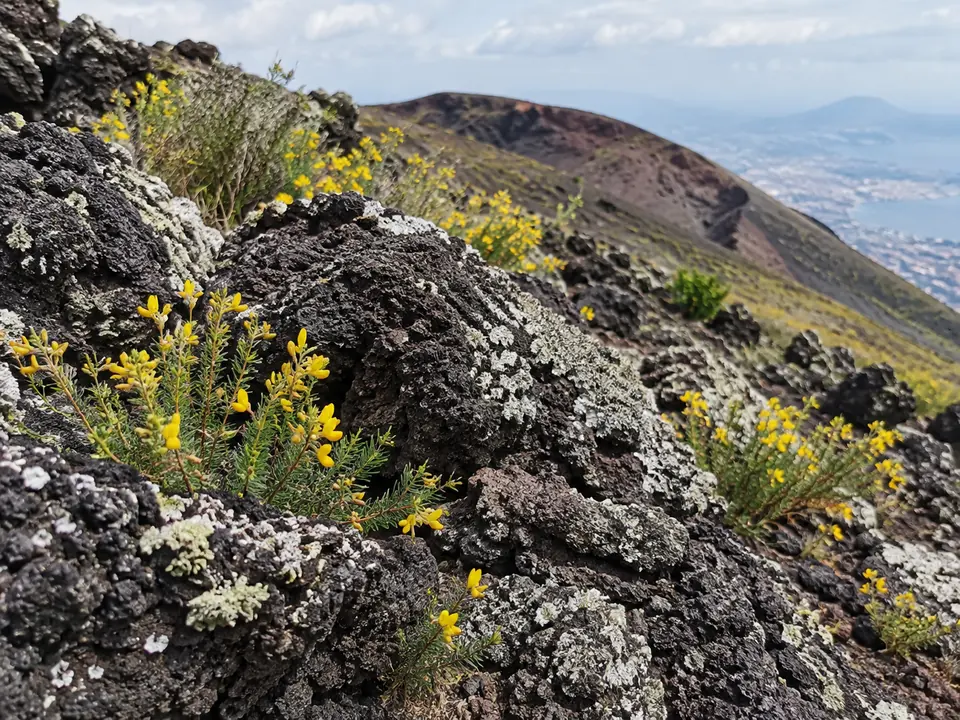
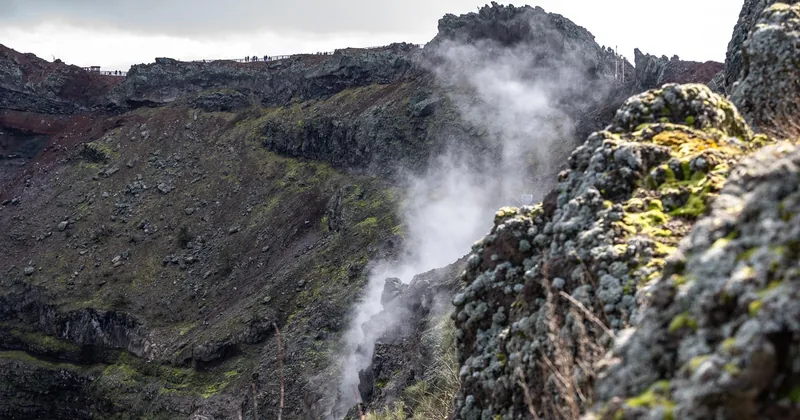
That eruption destroyed San Sebastiano al Vesuvio, Massa di Somma and Ottaviano, according to Wikipedia. It also destroyed the first funicular, opened in 1880 and celebrated by the song «Funiculì, Funiculà». The 1944 lava flows are the ones you cross today on the path, covered in grey lichens.
1944 closed a phase of activity that began in 1913. Since then, Vesuvius has not erupted again, and the signs of that year are still readable: on the path you walk on ash, lapilli and small lava flows from 1944.
How many times has Vesuvius erupted?
Many: after AD 79 there were 1631, six eruptions in the 18th century, eight in the 19th, then 1906, 1929 and 1944.
None of the eruptions after AD 79 were as large or destructive as that of Pompeii. The last two phases of activity, from 1875 to 1906 and from 1913 to 1944, each lasted over 30 years. Some eruptions were so strong that in 472 and 1631 the ash reached Constantinople, over 1,200 km away.
| Year | What we know |
|---|---|
| AD 79 | Destroys Pompeii, Herculaneum, Oplontis and Stabiae |
| 1631 | About 3,000 victims |
| 18th century | Six eruptions, including 1779 and 1794 |
| 19th century | Eight eruptions, including 1872 |
| 1906 | Over 100 victims |
| 1929 | Eruption |
| March 1944 | Last eruption; destroys San Sebastiano, Massa di Somma, Ottaviano |
What happened in the AD 79 eruption?
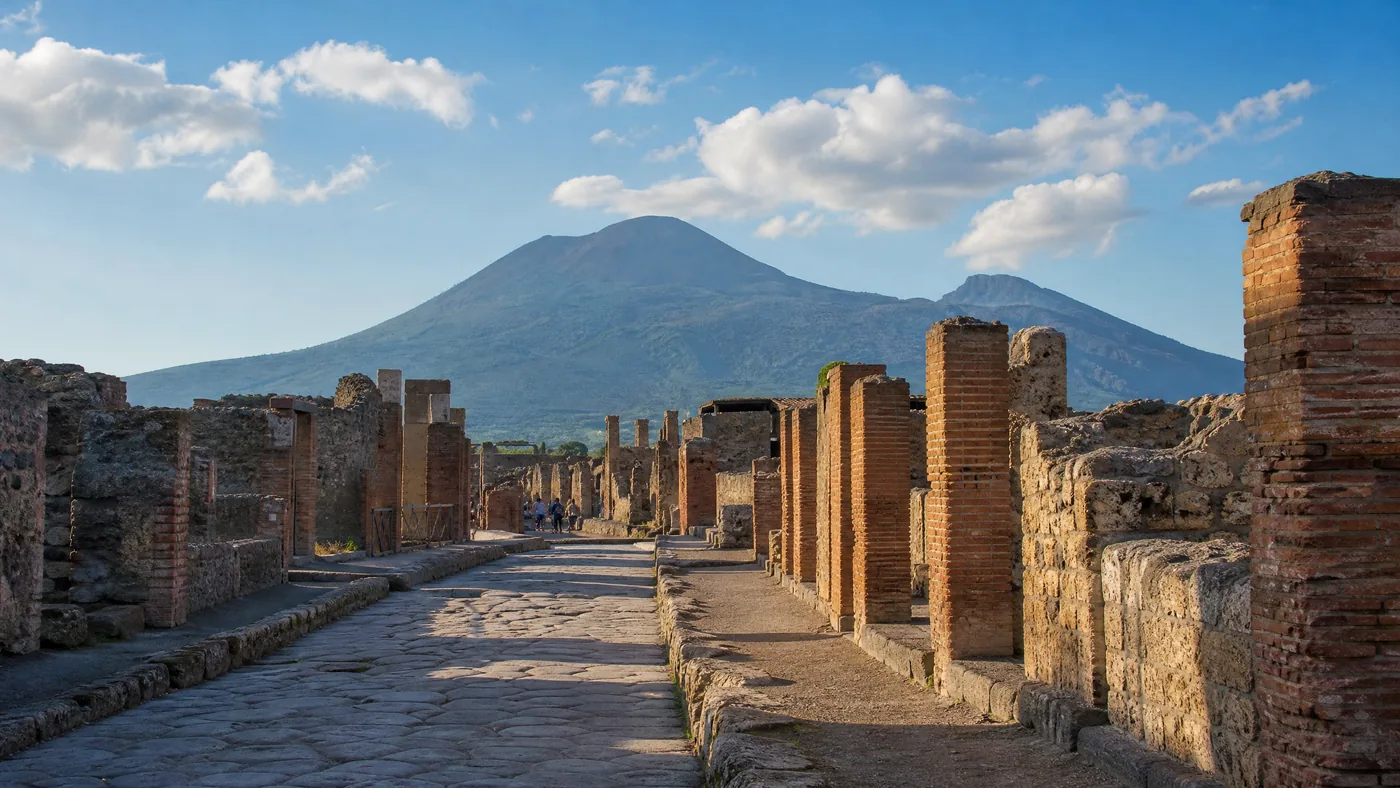
The eruption lasted two days and buried Pompeii, Herculaneum, Oplontis and Stabiae.
On the first day, a very tall column caused ash and pumice to fall on the area. On the second day, pyroclastic flows devastated Herculaneum and Pompeii. It is thought that the dead numbered over 1,000, but the exact number is not known.
The only direct account is two letters from Pliny the Younger to the historian Tacitus. They also recount the death of his uncle, Pliny the Elder, who set off with the fleet to bring aid.
The buried cities can still be visited today, and several tours combine them with the climb to the crater: find the options in the Pompeii and Vesuvius guide.
Pompeii with a guide and departure from Naples; with the full option you also climb to the crater of Vesuvius, with lunch.
Discover the Pompeii and Vesuvius day trip with pizza Tour detailsDid the AD 79 eruption happen in August or October?
The traditional date is 24 August, but the most recent evidence indicates autumn.
24 August comes from a 1508 print of Pliny's letters, and centuries of hand copying may have altered it. In October 2018 in Pompeii, a charcoal inscription emerged corresponding to 17 October. Some doubt it was from AD 79; a 2022 study places the eruption between 24 October and 1 November. It is discussed on Wikipedia.
What was the largest eruption of Vesuvius?
Among historical ones, the AD 79 eruption; in terms of number of victims, 1631 also weighs heavily, with about 3,000 deaths.
The AD 79 eruption is the last in a series of large explosive eruptions, called Plinian, which began about 19,000 years ago. The 1906 eruption caused over 100 deaths. The 1944 one destroyed three towns at the foot of the volcano.
Pompeii with a guide and then the climb to Vesuvius, in a day from Naples or Sorrento.
Check dates for Pompeii and Vesuvius in one dayHow Vesuvius is formed: Somma and Gran Cono
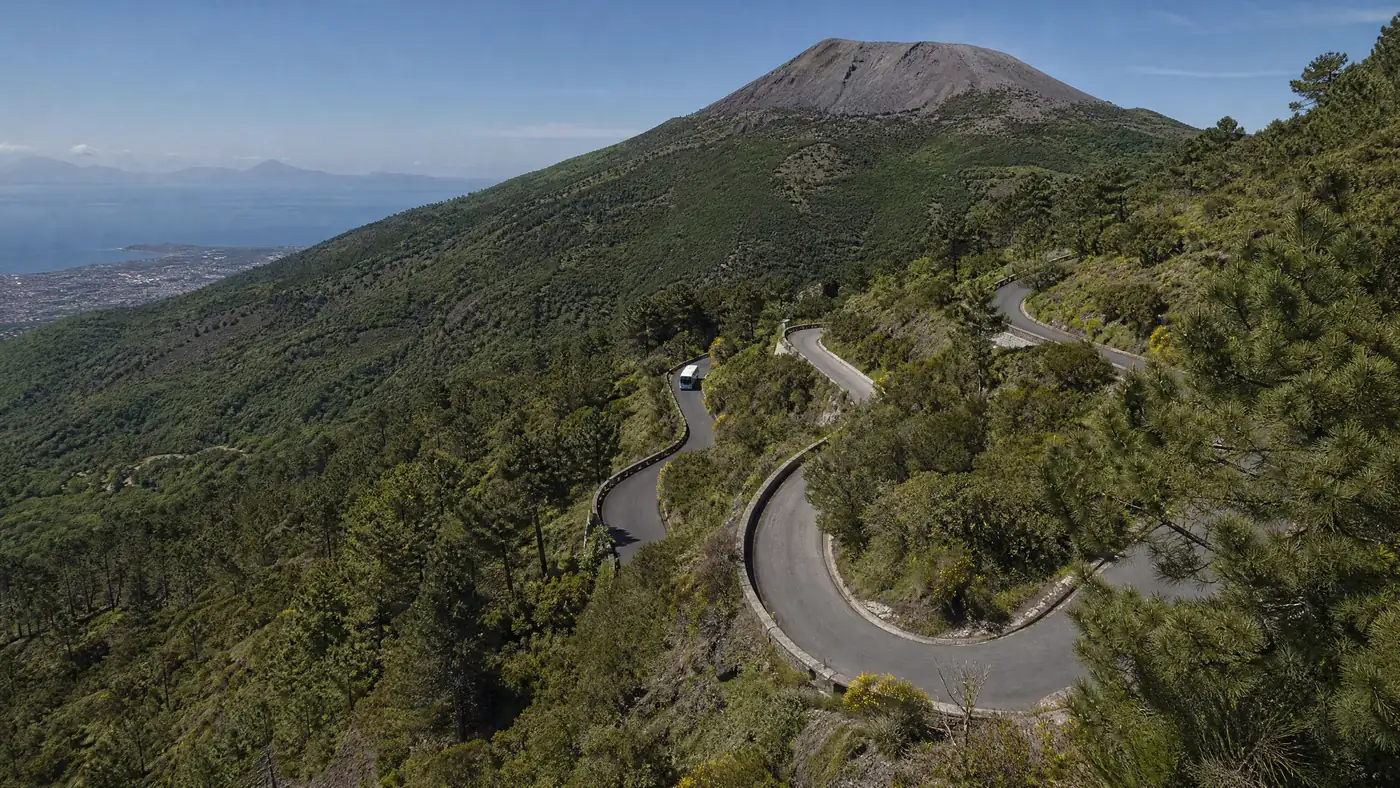
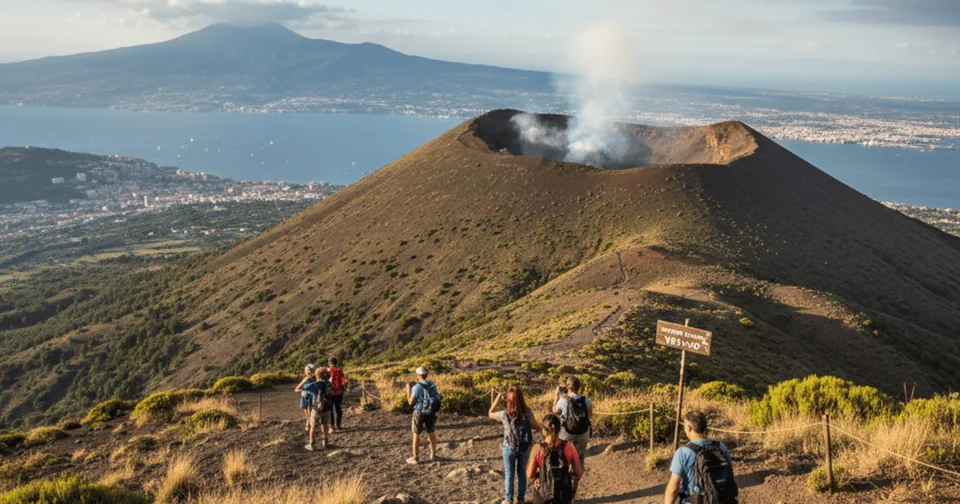
Vesuvius is a double volcano: the Gran Cono, born in AD 79, stands inside the caldera of the older Monte Somma.
This is why it is also called Somma-Vesuvius. The top of the Gran Cono is at 1,281 metres; the rim of Somma reaches 1,132 metres at Punta Nasone. The volcano is located about 9 km east of Naples, at coordinates 40°49′17″N 14°25′34″E.
From the Gran Cono path this structure is clearly visible: the wall of Somma and, in between, the depression called Valle del Gigante, which in the western part is named Atrio del Cavallo.
Where does the name Vesuvius come from?
No one knows for sure: the proposed etymologies are various and none is accepted by everyone.
Latin authors used Vesuvius and also the forms Vesaevus, Vesevus, Vesbius and Vesvius. Given that different language groups lived in Campania, every hypothesis depends on which language is thought to have been spoken there. For this reason, we do not choose one.
Greek authors also mentioned the volcano, with forms such as Ouesouion. The linguistic landscape was varied: Naples itself, Nea-polis, «new city», recalls the presence of the Greeks, while in the countryside lived the Osci, an Italic people.
Is Vesuvius still active?
It is considered an active volcano, today dormant: the alert level is green.
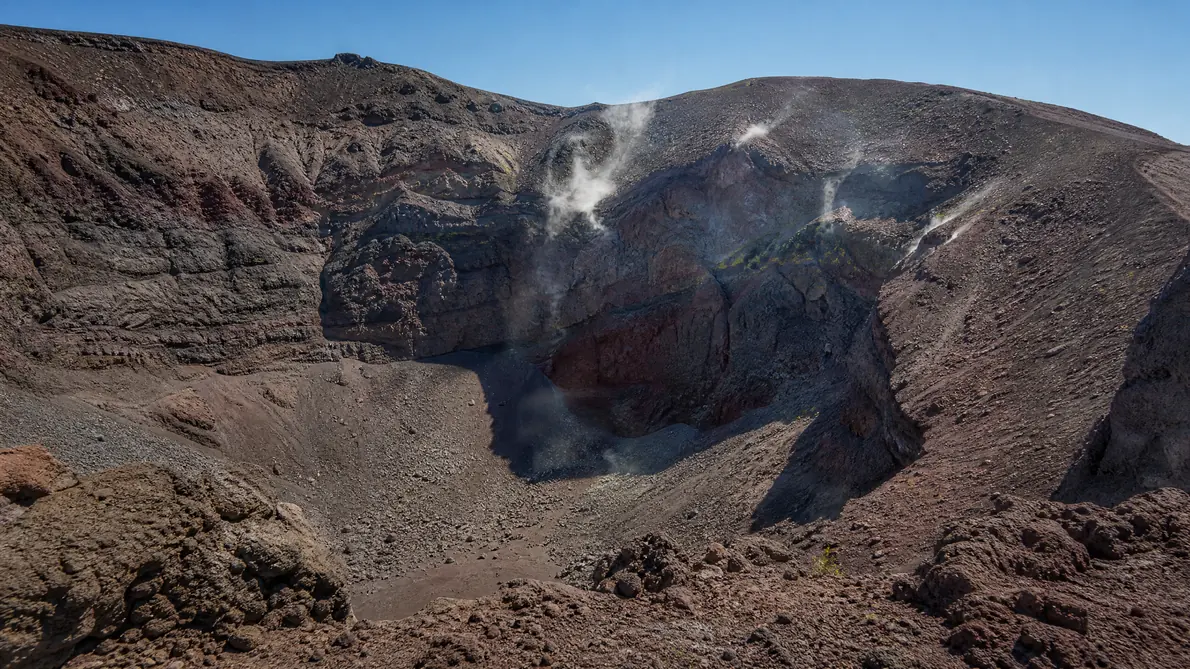
Since 1944 it has only shown fumaroles and low seismicity. According to the Civil Protection page there are no signs of a short-term resumption of eruptive activity. About 700,000 people live on its slopes, and the red zone includes 25 municipalities between the provinces of Naples and Salerno. It is monitored by the Vesuvius Observatory, founded in 1841, the oldest volcanological observatory; INGV publishes monthly bulletins. The Vesuvius National Park was established on 5 June 1995.
For visitors, the practical consequence is simple. With a green alert the path follows its schedule; it is closed by orange weather alerts or documented force majeure.
Round trip from Pompeii or Naples and the crater ticket already included.
Check dates for the transfer with ticketFrequent questions
How high is Vesuvius?
The summit of Gran Cono is at 1,281 m. The visitor path reaches 1,170 m.
Where is Vesuvius?
In Campania, about 9 km east of Naples, at coordinates 40°49′17″N 14°25′34″E.
How many deaths did the AD 79 eruption cause?
It is estimated at over 1,000, but the exact number is not known.
When was Vesuvius National Park established?
5 June 1995.
Ready to book
Choose your climb
Free cancellation up to 24 hours before on every option. Prices are starting prices in USD and vary with the season.
From Naples: Pompeii and Vesuvius with Pizza
Pompeii with guide; Vesuvius and pizza in the full-day option
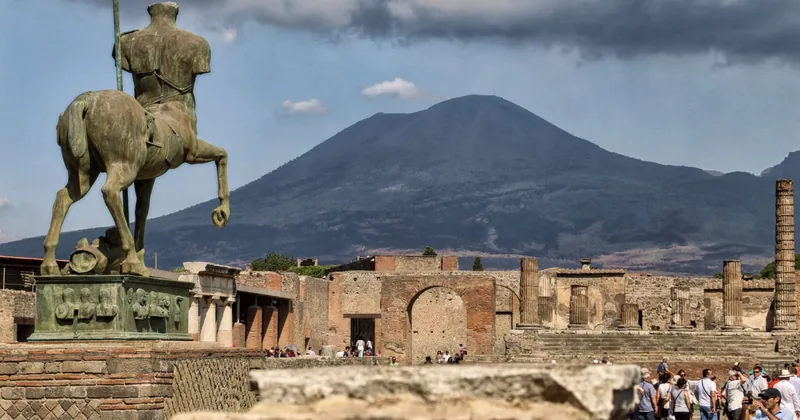
Pompeii and Vesuvius in One Day
Pompeii with guide and Vesuvius climb, tickets included
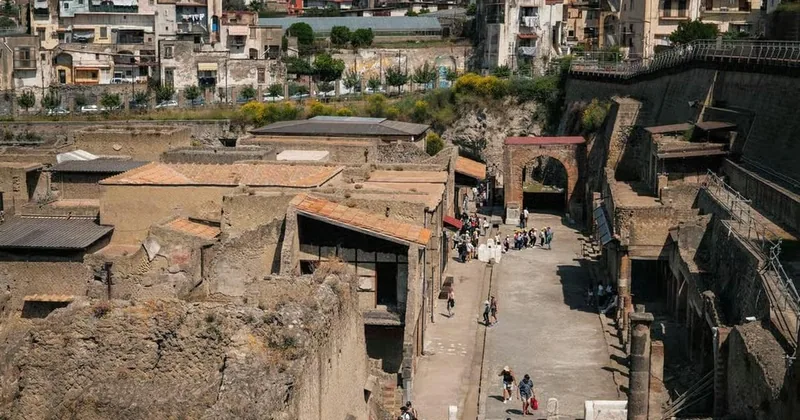
Vesuvius and Herculaneum from Naples
Vesuvius entry with audio guide, Herculaneum with guide